What Removal Companies Won't Move (and Why Crews Say No)
Most removal companies won't carry anything that can catch fire, leak or explode, and many won't move pets or work inside lofts. At Leaways Removals & Storage, our crews don't take flammable paints, gases or liquids, don't enter loft spaces and don't transport animals. Gas and plumbed-in appliances need disconnecting before we arrive. Tell us about anything unusual before you book, so we can confirm whether we can move it and bring the right kit.
Recently our crew moved a customer from Milton Keynes to London. He had agreed in advance to travel with us in the van, and there was one empty seat in the cab for him. After loading, as the crew were about to leave, he brought along two cat carriers that we had not been told about, with his cats inside.
We had to say no, and we did it as kindly as we could. Our vans are three-seaters, so that one empty seat was the spare he was taking, and we're not insured to move pets. He arranged a taxi for the cats instead. Nobody had done anything wrong. It's simply something most people don't think to ask about until the day.
Pets aren't the only surprise. Customers often expect us to take the chemicals from a home workstation, a gas cylinder from the garage and similar items, and those can't go on our vans either. Each rule below comes with the reason behind it, so you can sort these things a week early rather than on the drive.
A closed van turns a small leak into a big problem
A removal van is a sealed metal box. On a warm day the load area heats up fast, and nothing vents it on the run from Luton to Milton Keynes.
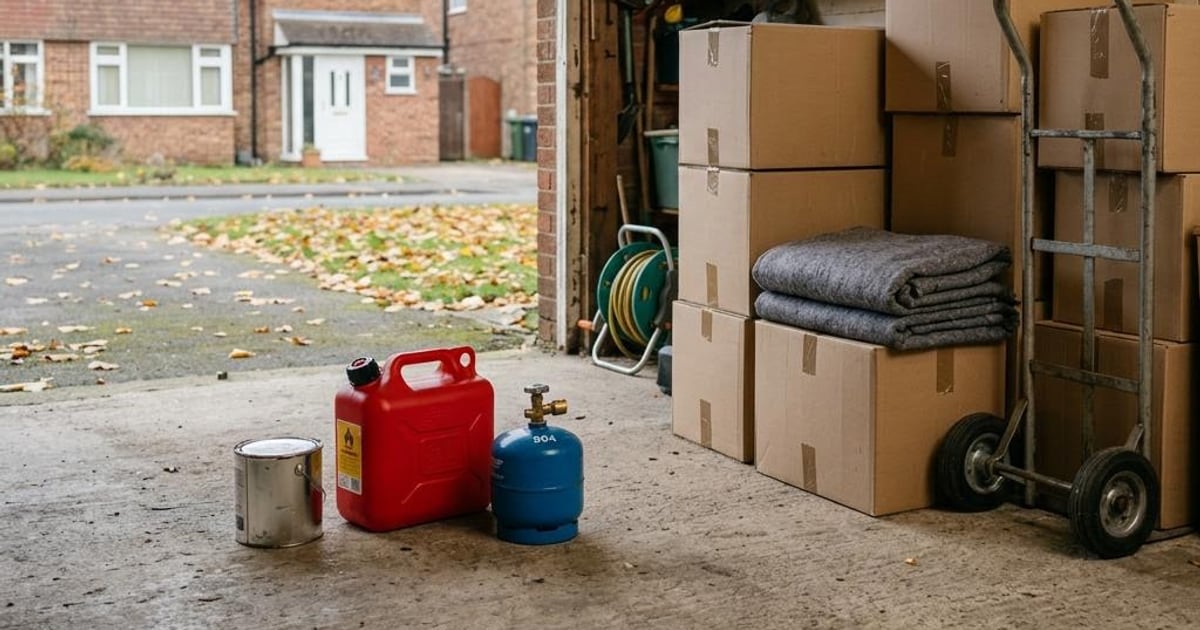
That's why flammable paints, gases and liquids stay off our vans. Think gloss and oil-based paint, white spirit, paraffin, petrol, camping gas, barbecue bottles and aerosols with flammable propellant. One loose lid can soak a mattress. One knocked valve can fill the load area with gas.
The fix starts a week or two before moving day, not on the day itself.
- Run the mower dry. Cut the lawn one last time, then let the engine run until it stops. Do the same with strimmers and leaf blowers.
- Use up or pass on paint. Neighbours, local reuse groups and community projects often welcome part-used tins.
- Check your council's tip. Luton, Central Bedfordshire, Hertfordshire and Buckinghamshire councils all run household waste recycling centres. Check each site's list before you drive over, because accepted items vary.
- Keep what you must, and carry it yourself. If you're keeping a small gas bottle, follow the supplier's guidance, keep it upright and secure, and transport it in your own vehicle.
Crew tip: open the shed, garage and cupboard under the sink during your inventory, not just the main rooms. That's where most of this list hides.
Other things that stay off the van, and the law behind them
Paint and petrol are the ones most people expect. These catch people out too:
- Gas cylinders and workstation chemicals. Bottled gas, solvents, resins and the chemicals that build up around a home workstation or hobby bench all stay off the van. Use them up, return cylinders to the supplier where that's offered, or carry them yourself following the supplier's guidance.
- Bleach and household chemicals. Strong cleaners, drain unblocker, weedkiller and pool chemicals can leak or react if a bottle splits. Use them up or take them to a recycling centre that accepts them.
- Car batteries and spare lithium batteries. They can leak acid or overheat if they're damaged. Recycle old ones, and carry e-bike and scooter batteries yourself.
- Fireworks, firearms and ammunition. We don't carry them, so make your own arrangements, in line with any licence you hold.
- Asbestos. If you think something contains asbestos, don't lift, break or bag it. It needs a specialist, not a removal crew.
- Perishable and frozen food. It spoils and leaks in a closed van. Run the freezer down in the weeks before the move, and take anything you're keeping in a cool box in your own car.
- Fish tanks. We can move an empty fish tank; the fish, water and gravel need to be sorted before we arrive. Fish travel with you, like any other pet. Tell us about the tank before you book.
Part of the reason is the law. Carrying dangerous goods by road in Great Britain is covered by the Carriage of Dangerous Goods and Use of Transportable Pressure Equipment Regulations 2009 (legislation.gov.uk), and the Health and Safety Executive explains how they apply. A household removal isn't set up to carry dangerous goods, so these items stay off our vans.
The loft stays off the job sheet, so plan the ladder work early
Our crews don't enter loft spaces, for insurance reasons, but the crew will help from floor level. It's far easier to plan for this a week ahead than to find out on the day, standing under an open hatch with the ladder already down.
The reasons make sense once you've been up there. Plenty of lofts have no boarding, so one foot between the joists goes straight through the bedroom ceiling. Hatches are narrow, light is poor and the space under the tiles gets very hot in summer. Passing heavy boxes down a loft ladder is where backs, ankles and ceilings get hurt.
Bring the loft contents down to the landing in the week before the move. Work in short stages, with a second person at the foot of the ladder taking each box. Once everything sits on the landing, the crew wraps, carries and loads it with the rest of your home.
There's a bonus to doing it early. Lofts hold far more than anyone remembers: Christmas decorations, old baby kit, a box of cables from three houses ago. Seeing it all in daylight is the best moment to decide what makes the trip. Add whatever stays to your inventory, so the van and crew size are right from the start.
Your appliances need a head start before the crew arrives
Washing machines, fridge freezers and cookers hold up more loading crews than any sofa. They're heavy, but the real problem is that they're rarely ready to go.
Gas cookers and hobs need a Gas Safe registered engineer. Gas Safe Register says only a registered engineer should disconnect them, and the engineer must seal the outlet when the cooker leaves (Gas Safe Register, 2026). Book the engineer for the day before you move.
Washing machines need disconnecting and draining. If you still have the transit bolts that came with the machine, refit them, because they lock the drum in place on the road. Lost them? Search your model number and order a set online. Keep a towel handy when you pull the hoses, because a cupful of water always escapes.
Fridge freezers need defrosting. Switch the freezer off the day before, prop the door open and lay towels underneath. Once it reaches the new kitchen, let it stand upright before you switch it on. Your manual will tell you how long.
Plumbing and wiring sit in the same camp. Plenty of removal firms don't disconnect or reconnect them, so ask yours before you book and line up a plumber or electrician if you need one.
The grey areas the crew will talk through with you
Some things aren't banned, but they need a quick conversation.
Chests of drawers are the classic example. Light, soft clothing can sometimes stay inside a solid unit if you secure the drawers. Books, tools and anything heavy need to come out, because the weight can split the joints when the unit tilts on the stairs. Flat-pack furniture needs emptying every time. The final call sits with the crew on the day, so pack drawers loosely enough to empty in a minute.
We do move plant pots and garden ornaments, but plants still travel badly in a closed van. Pots tip, soil spills and leaves scorch or freeze, depending on the season, and plants can't be stacked, so they take up more floor than you'd think. Mention any big pots before you book. Water them lightly two days before the move rather than on the morning, so they're lighter and less messy.
Pianos and safes aren't refused outright, but they're specialist items. Tell us about them first, before you book, so we can confirm whether we can move them and bring the right kit and crew.
Jewellery, passports, cash, your laptop and the folder with your completion paperwork belong with you, not on the van. Our guide to moving antiques, art and high-value items explains how to protect the larger pieces.
Pets travel with you too. We don't transport animals, in the back or in the cab, and our guide to moving house with pets covers how to keep cats and dogs calm on the day.
Access decides how things travel, not just whether they do
Sometimes the item is fine and the route out of the building is the problem.
In a typical second-floor flat in Luton town centre, the tightest point is usually the turn at the top of the stairs, not the front door. A three-seater sofa that arrived before the banister went in may not leave the same way. A king-size bed frame or a large wardrobe often has to come apart to clear a narrow landing.
Parking shapes the day too. Narrow terraced streets, permit zones and shared car parks can all add distance between your door and the van. Each extra metre of carrying adds time. Our Luton removals page explains how to arrange a parking bay suspension with the council.
This is why our quote calculator asks about floor level, lift access, parking distance and dismantling. Those details tell the crew how each piece will leave the building, before anyone lifts a thing. If you'd like help with packing as well, our packing service can do the wrapping and boxing for you.
A ten-minute walk-round that saves an hour on the day
Before moving day, walk your home with this article in mind. Open the shed and the garage. Look under the kitchen sink and in the bathroom cabinet. Check the loft hatch, the meter cupboard and the back of the wardrobe.
Put anything that can't travel into one of three piles: use it up, give it away or take it to the tip. Then make one clearly labelled "not on the van" box for the things you'll carry yourself.
The crew can then start loading the moment they arrive, and nobody stands in the drive debating a jerry can.
If your move includes heavy, unusual or awkward items, add them to your inventory in our quote calculator or call us on 01582 383 503. We'll confirm what we can move and send the right crew and equipment.
Frequently asked questions
What will removal companies not move?
Most removal companies refuse flammable, explosive or leaking items, such as petrol, paint thinners, gas bottles and strong household chemicals. At Leaways, our crews don't take flammable paints, gases or liquids, don't enter loft spaces and don't transport pets, including in the cab. Tell us about anything unusual before you book so we can confirm whether we can move it.
Do removal companies empty lofts?
Some do, but Leaways crews don't enter loft spaces. Bring loft boxes down to the landing in the week before your move and include them in your inventory. The crew will then wrap, carry and load them with the rest of your belongings.
Will removal companies take paint?
Leaways doesn't accept flammable paints, such as gloss and oil-based paint, or solvents like white spirit. Use up part-used tins, give them away locally or check your council's recycling centre. If you're not sure whether a tin counts, ask us before moving day.
Should I empty drawers before moving?
Empty drawers that hold heavy items, and always empty flat-pack units. Light, soft clothing can sometimes stay in a solid chest of drawers if you secure the drawers. The crew makes the final call on the day, so pack drawers in a way that's quick to empty.
Planning a move?
Get a personalised calculator price from Leaways Removals & Storage, fixed and guaranteed once booked from accurate move details. We specialise in well-planned moves for flats and 1-2 bedroom homes across Bedfordshire, Hertfordshire and Buckinghamshire.
Get a free quote