
How Do Student Removals Work Between University Halls, Private Lets and Summer Storage?
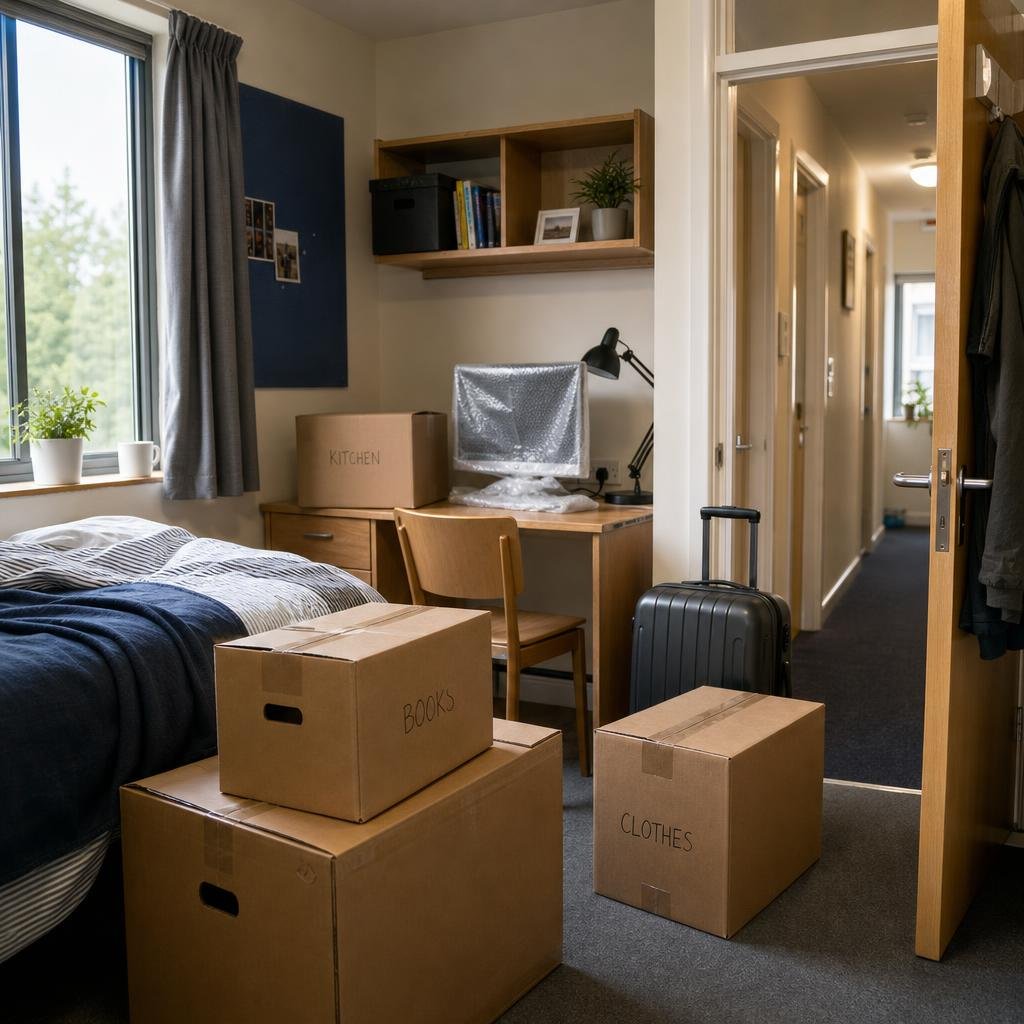
Student removals are usually smaller than a full house move, but they are not always simpler.
The difficult part is often timing rather than volume. Your university hall may require you to check out in the morning, while the tenancy for your next house does not begin until several days later. You may be travelling home for the summer, going overseas, changing university, or moving from halls into a private flat without having the next address confirmed yet.
In those situations, a student removal can be organised as either a direct move from one address to another or a two-stage move using temporary storage.
At Leaways, that can mean collecting your boxes, suitcases, furniture and other belongings from your accommodation, moving them into storage when necessary, and arranging delivery to your next address when you are ready. Leaways specifically offers student storage with collection and redelivery; its storage is currently provided alongside a removals or packing service rather than as standalone self-storage.
What is a student removal and how does it actually work?
A student removal is simply a professionally organised move sized around the belongings you actually have rather than the number of bedrooms in a conventional house.
It can include:
- University halls → private student house or flat
- Halls → family home
- Student house → another student house
- Accommodation → summer storage → new accommodation
- University town → another university
- Student accommodation → storage while you travel or return overseas
The important point is that “student move” does not describe one standard load.
One student may be moving eight boxes, two suitcases and a monitor. Another may have 20 boxes, a bicycle, television, computer setup, office chair, mini fridge, bookcase, clothes rail and furniture accumulated over several years.
That difference matters because Leaways calculates removal prices using information such as the inventory, collection and delivery addresses, floor level, lift access, parking distance, crew requirement and optional services. Its current small-move category specifically includes student moves, with guide prices starting from £99.
So when requesting a quote, do not just write “one student room”. Tell the removal company what is actually leaving the room.
A useful inventory might look more like: 12 medium boxes, 3 suitcases, 1 bicycle, desk chair, 27-inch monitor, television, clothes rail, bedside cabinet, 4 large bags and 2 kitchen boxes.
That gives the mover far more useful information than the size of the bedroom.
It is particularly important to include belongings kept outside your room. Universities warn departing students to check communal kitchens, cupboards and bicycle stores rather than concentrating solely on their bedroom. LSE, for example, specifically reminds students to remove bicycles from hall bike stores, while Bristol tells departing residents to remove belongings from communal areas and storage cupboards.
What should I tell the removal company before booking a student move?
For a reliable quote, give the removal company five things: your inventory, both locations, access information, your dates and any extra services you need.
The access details can matter almost as much as the number of boxes.
Tell the mover:
- Which floor are you on? A ground-floor student room and a fifth-floor room are different jobs.
- Is there a lift? Also check whether the lift is large enough for your belongings and whether residents are allowed to use it for removals.
- How close can the van get? Student halls and modern apartment blocks often have controlled entrances, barriers, loading areas or limited parking.
- Does reception need the vehicle registration? Ask before the day rather than discovering this when the van arrives.
- Is there a fixed check-out or check-in time? This is particularly important when the collection and delivery are happening on the same day.
University accommodation can impose very specific departure arrangements. King’s College London, for example, currently requires residents to check out by 10:00am on the final contract day, while LSE says its check-out time is usually 10:00am but may vary by hall.
That is why booking a removal simply for “Saturday morning” may not be precise enough. If your key must be returned at 10:00am, the removal should normally be planned backwards from that deadline.
The same principle applies at the destination. Do not assume that having a tenancy beginning on a particular date automatically means you can arrive with a removal vehicle at any time that day. Check your key collection, reception and building-access arrangements first.
Professional packing can also be arranged when it is part of the removal. Leaways currently provides packing alongside removals, including materials and packing for fragile belongings, rather than as an unrelated standalone service.
For students finishing exams, working until the end of term or preparing to fly home, that can be useful: instead of trying to pack an entire room between your final assessment and check-out, the packing and removal can be planned together. Start with the quote calculator once you know your inventory and deadlines.
What happens if my old tenancy ends before my new one begins?
This is where student summer storage becomes part of the removal rather than a separate problem.
Imagine your hall contract finishes on 30 June, but the keys to your new student house are not available until 5 July. You have a five-day gap. There is no direct A-to-B move available because address B is not yet accessible.
Instead, the move can be organised in two physical stages:
- Stage one: your belongings are collected from halls and taken into storage.
- Stage two: when your new accommodation becomes available, the belongings are collected from storage and delivered to the new address.
Leaways describes its student storage service in exactly this way: it can collect belongings from student accommodation, store them during holidays and deliver them again when the student returns.
This can also work where the gap is much longer — for example leaving university accommodation in June, spending July and August with family or overseas, and moving into a new private let in September.
Instead of university → family home → university, you can potentially arrange university → storage → new accommodation. That avoids transporting the same desk, monitor, books, kitchen equipment and boxes hundreds of miles simply because the tenancy dates do not match.
Universities themselves recognise summer storage as a practical solution. LSE advises students who cannot take everything with them to arrange summer storage, and UCL similarly points students towards storage where belongings cannot travel with them at the end of their accommodation agreement.
What if I do not know my new address yet?
You may still be able to organise the first half of the move.
If the immediate requirement is to leave your current accommodation and place your belongings into storage, your final address does not necessarily have to be known at collection. The eventual redelivery can be planned once your destination and move-in date are confirmed.
However, you should establish how redelivery will be charged and how much notice the storage provider requires before assuming that the weekly storage price represents the total cost.
With Leaways, access to goods already in storage is coordinated through the team rather than operating like walk-in self-storage. Early retrieval can be arranged, but it needs to be scheduled.
That distinction is particularly important for international students. Do not place something into managed storage on the assumption that you can simply visit the warehouse the following morning and take it out yourself.
How much do student removals and summer storage cost?
There is no single national price for a student removal because the amount being moved, journey, property access and labour requirement vary.
For a useful Leaways benchmark, small moves and student moves currently start from £99. The final removal price depends on factors including item size and quantity, access, distance and the loading arrangement. Leaways also states that its online calculator uses collection and delivery details, inventory, optional dismantling or packing, crew size, parking distance and time slots to build the quote.
For student storage, Leaways currently publishes the following introductory guide prices (verified on the storage page):
| Storage space | Current guide price | Indicative use |
|---|---|---|
| 25 sq ft | From £18.99 per week for the first 8 weeks | Smaller loads / studio-type contents |
| 50 sq ft | From £28.99 per week for the first 8 weeks | Around a 1-bedroom flat’s contents |
| 100 sq ft | From £48.99 per week for the first 8 weeks | Larger household loads |
| 200 sq ft | From £68.99 per week for the first 8 weeks | Very large household/commercial loads |
These are current Leaways storage guide prices as of September 2026. The storage page states that storage can run from as little as one week to longer periods.
There is one important point that students should understand when comparing storage companies:
The weekly storage price is not necessarily the total cost of a move involving storage.
With Leaways, the storage charge covers the storage space and period; moving the belongings into and later out of storage forms part of the removal service rather than being included automatically in the weekly storage price.
So a proper comparison should ask: “What will it cost to collect my belongings, store them for the required period and deliver them to my next accommodation?” — not only “How much is storage per week?”
A £15 weekly storage rate can be more expensive overall than a £20 rate if the first company then charges substantially more for collection, handling or redelivery.
For the same reason, tell the removal company your realistic box count. Student belongings have a habit of multiplying during packing. Six visible boxes may become fourteen once clothes, books, bedding, shoes, kitchen cupboards and bathroom belongings have actually been packed.
Leaways’ own moving guidance recommends reducing unwanted volume before packing because the amount being transported affects the move.
What do I need to do when moving out of halls or a private student let?
The removal and the accommodation check-out are related, but they are not the same task.
Your removal company is there to move the belongings you have asked it to move. You are still responsible for complying with your hall, landlord or letting agent’s departure requirements.
For university halls, this commonly means leaving the room empty, clearing shared cupboards and kitchen items, removing rubbish and returning keys by the prescribed time. UCL states that residents are responsible for packing and moving all their belongings and may incur storage, disposal or cleaning costs for items left behind. LSE likewise says rooms and kitchens should be clean and empty and warns that belongings or rubbish left behind may result in charges.
That makes a final empty-room check worthwhile. Look inside wardrobes, drawers, under the bed, bathroom cupboards, kitchen cupboards, fridge and freezer, communal storage areas, plug sockets, bicycle stores and any external lockers.
Phone chargers and adapters deserve particular attention: LSE specifically identifies them as items students frequently leave behind.
For a private student house or flat, take the opportunity to document the property after the removal crew has finished. The University of Hertfordshire’s current end-of-tenancy guidance recommends cleaning the property, arranging the final inspection or inventory check, photographing rooms and communal areas, and recording utility meter readings — especially relevant if you are moving around Hatfield.
Those photographs are much easier to take after your boxes and furniture have been removed.
In England, where a tenancy deposit is held under a qualifying tenancy deposit protection arrangement, GOV.UK says the landlord must return it within 10 days once both sides have agreed the amount to be returned; disputed money remains protected while the disagreement is resolved.
So before the removal van leaves, do not automatically jump into the passenger seat and disappear. Spend five minutes walking through the empty property.
What should I put into summer storage — and what should stay with me?
Most ordinary student belongings can be stored: boxed clothing, books, kitchen equipment, bedding, small furniture, chairs, desks, appliances and personal possessions are typical examples. Leaways states that its storage can accept most household items, but not perishable goods, hazardous materials, illegal items or items with strong odours.
That means the half-used fridge contents do not belong in a storage box for September. Nor is storage the right place for everything valuable or personally essential.
Keep a separate travel or survival bag that never goes onto the removal vehicle or into long-term storage.
For most students, that should contain your passport or other identification, medication, phone and laptop chargers, laptop or tablet where needed for travel or work, keys, wallet, travel documents, accommodation paperwork, essential toiletries, a change of clothes and anything you may need before redelivery.
The University of Bedfordshire advises students arriving at university to have documents such as accommodation paperwork and valid identification available; the same principle applies when leaving one property and travelling to another — including moves in and around Bedford and Luton.
Leaways’ own moving guidance similarly recommends keeping priority essentials separate rather than burying them inside the main removal load.
Electronics deserve some extra thought. A monitor or television can be moved professionally, but tell the removal company that it is part of the inventory rather than hiding it under “miscellaneous boxes”. Use the original packaging where suitable or ask about appropriate protective packing.
For computers, also make sure important data is backed up independently. Leaways’ current terms explain that while reasonable care is taken with electrical and electronic items, internal faults, software problems and data loss are treated differently from visible physical damage caused during handling. Standard contractual liability remains limited unless an increased limit is agreed in writing (including the familiar per-item basis unless extended).
How should international students or students travelling home for summer plan the move?
International students often face an extra decision: is it worth taking everything home?
For a suitcase of clothes, perhaps. For twelve boxes, bedding, pans, textbooks, a monitor, desk chair and bicycle, transporting everything internationally only to bring it back for the next academic year can become impractical.
Temporary storage allows you to separate two journeys:
- Your journey: university → airport → home.
- Your belongings’ journey: university accommodation → storage → next accommodation.
Those journeys do not have to happen on the same dates.
This becomes particularly useful when your next room has not yet been allocated. Cranfield University, for example, currently tells incoming students not to ship belongings to the university before arrival because it does not have facilities to store luggage in advance.
So sending boxes directly to a future university reception without checking first is not a safe plan.
Instead, confirm three dates:
- The last date and time you can occupy your existing room.
- The date you are personally leaving the area or the UK.
- The earliest date your next accommodation will accept you and your belongings.
If there is a gap between the first and third dates, plan for it rather than hoping the accommodation providers will hold your belongings.
It is also sensible to label stored boxes for retrieval priority, not merely by contents — for example: OPEN FIRST – bedding and towels; BOOKS – no early access needed; KITCHEN – September; WINTER CLOTHES; UNIVERSITY EQUIPMENT. This becomes valuable if your plans change and you need one particular category before final redelivery.
How can I make a student move cheaper and easier?
The most economical student move is usually not the one with the cheapest advertised hourly rate. It is the one that has been sized and planned correctly.
Start by getting rid of things you genuinely do not need. There is little sense paying to move and store a £10 clothes rail, broken printer or pile of old kitchen equipment that will be replaced in September. Leaways’ moving guidance specifically recommends reducing volume before packing, while universities including UCL, King’s and Hertfordshire actively encourage students to donate, sell or responsibly dispose of unwanted items when leaving accommodation.
Then pack properly. Loose carrier bags, open laundry baskets and individual kitchen items may look quicker when you are packing at midnight, but they are slower and harder to move efficiently than closed, sensibly weighted, labelled boxes.
Finally, confirm the practical details before moving day:
- Know your check-out deadline — do not discover at 9:45am that reception expects your keys at 10:00am.
- Count your actual boxes and update the mover if your inventory changes significantly.
- Include the bicycle, television, monitor, chair, kitchen boxes and anything in communal storage.
- Check the lift — a building having a lift does not necessarily mean it is available for removals at your chosen time.
- Confirm parking or loading arrangements.
- Keep travel documents and medication with you.
- Know whether you are moving directly or into storage; if using storage, ask for the complete collection–storage–redelivery cost — not just the weekly rate.
For Leaways customers, accurate move information also has a direct pricing benefit: its quote calculator builds the price around the specified inventory, addresses, floor and lift access, crew, parking and optional services, and the company states that once a move is booked from accurate details, the calculator price is fixed and guaranteed. Student discounts are also currently available when declared at booking.
Student removals and summer storage with Leaways
A student move does not need to be treated like a miniature house move — and it does not need to become three separate logistical problems.
Leaways can coordinate collection from university halls or private accommodation, small removals, professional packing where required, temporary storage and later redelivery as one planned service. Its current student-storage service is designed specifically around collecting belongings from accommodation, storing them between terms or tenancies and delivering them again when required.
Leaways is based in Luton and provides removals and storage services across Bedfordshire, Hertfordshire, Buckinghamshire and Milton Keynes, including university areas such as Luton, Bedford, Cranfield, Hatfield and Milton Keynes. Its Luton and Cranfield service pages specifically identify student and university moves as part of the work it handles.
Small/student moves currently start from £99, subject to the belongings being moved, distance, property access and service required. Storage currently starts from £18.99 per week for the first eight weeks, and is available alongside qualifying removals or packing rather than as standalone self-storage.
Moving out of halls, changing student accommodation or facing a gap between tenancies?
Tell us what you are moving, where it needs collecting from, your check-out deadline and when your next accommodation becomes available. We can then plan the move around the dates you actually have — including temporary storage where the two tenancies do not meet.
Frequently asked questions
Can I use storage if my new student address is not confirmed yet?
Yes for the first stage. Leaways can collect from halls or a private let into storage before your next postcode is known, then plan redelivery once keys and dates are confirmed. Ask how redelivery is priced and how much notice is needed — the weekly storage rate alone is not the full cost. Access to stored goods is scheduled through the team, not walk-in self-storage.
Are student removal prices fixed at £99?
£99 is a current guide starting price for small/student moves, not a universal fixed fee. The quote calculator builds a personalised price from inventory, addresses, floor and lift access, parking, crew and optional packing or dismantling. Once booked from accurate details, Leaways states that calculator price is fixed and guaranteed. Declare any student discount at booking if applicable.
What should I keep with me instead of putting into summer storage?
Keep a travel or survival bag off the van: passport or ID, medication, phone and laptop chargers, laptop or tablet if needed, keys, wallet, travel and accommodation paperwork, toiletries, a change of clothes and anything you may need before redelivery. Do not store perishables, hazardous items or anything you must access without notice. Label boxes by retrieval priority if plans may change.
Do I still need to clear halls myself if a removal company is booked?
Yes. The crew moves what you ask them to move; you remain responsible for hall or landlord check-out rules — empty room, communal cupboards, rubbish, keys by the deadline. Universities such as UCL and LSE warn that items left behind can attract charges. After the van leaves a private let, photograph empty rooms and take meter readings before you go.
Planning a move?
Get a personalised calculator price from Leaways Removals & Storage, fixed and guaranteed once booked from accurate move details. We specialise in well-planned moves for flats and 1-2 bedroom homes across Bedfordshire, Hertfordshire and Buckinghamshire.
Get a free quote